Pregnancy Week 6: The Geometry of Life
Welcome to Week 6! Your baby is now roughly the size of a sweet pea (approx. 5mm - 6mm) and is growing at a rate of nearly 1 millimeter per day. This week is defined by the C-shape curve. Because the nervous system and brain are developing faster than any other tissue, the embryo begins to curl inward, assuming the fetal position that protects the vital organs during their most sensitive stage of construction.
While the world cannot yet see your pregnancy, your body is undergoing a chemical revolution. Your blood volume is expanding by nearly 50%, and your heart rate may even increase to keep up with the demands of the developing placenta. Inside the womb, the foundation of the face—the nose, mouth, and ears—are moving from the sides of the head toward the center.
Fetal Stage: Embryo (C-Shaped Folding)
Crown-Rump Length: 5mm - 8mm (Pea size)
Fetal Heart Rate: 110 - 150 beats per minute
Developmental Key: Limb Bud Paddle Stage
Section 1: The C-Shape — Mechanical Evolution & The "Tail"
Standard pregnancy guides often omit the biological reason for the "embryonic tail." By Week 6, the embryo has a prominent tail-like extension at the end of the spinal cord. This is the coccygeal process. It exists because the spinal cord develops faster than the surrounding trunk and legs.
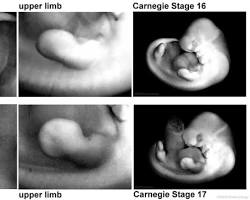
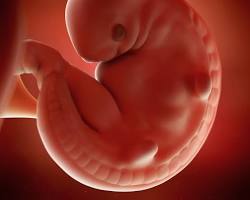
Rapid Expansion: The rapid growth of the brain and spinal cord forces the embryo to curl inward to fit within the gestational sac.
This folding is a masterpiece of biological engineering. As the embryo curls, it brings the developing heart and head closer together, allowing the primitive circulatory system to function with maximum efficiency while vessels are still microscopic. Furthermore, the brain is now dividing into three primary vesicles: the prosencephalon (forebrain), mesencephalon (midbrain), and rhombencephalon (hindbrain).
Section 2: The Heart — Dividing into Four Chambers
While last week the heart was a simple pulsing tube, Week 6 is the beginning of Septation—the process of growing internal walls to divide the heart into four distinct chambers.
Internal Engineering: Valves and walls are forming to ensure blood flows in only one direction through the tiny heart.
The fetal heart rate now reaches a peak of 110-150 beats per minute. This rapid pulse is necessary to drive blood through the newly forming umbilical cord to the placenta, where the baby exchanges waste products for oxygenated maternal blood.
Section 3: Limb Buds — The Paddle Phase
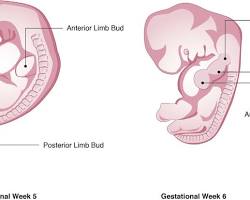
This week, the first signs of extremities appear as Limb Buds. They do not yet look like arms or legs; instead, they resemble small, flat paddles protruding from the sides of the embryo.
Future Movement: These buds contain the mesenchymal cells that will eventually differentiate into the bones and muscles of the hands and feet.
Section 4: Symptoms — Managing the Progesterone Peak
| Symptom | The Biological Reason | Management Tip |
|---|---|---|
| All-Day Nausea | hCG levels are climbing toward their first-trimester peak, irritating the stomach. | Eat small, protein-rich snacks every 2 hours to prevent an empty stomach. |
| Sore Breast Tissue | Increased blood flow and hormones are expanding the milk ducts. | Switch to a supportive sports bra or wire-free cotton bra for relief. |
| Bloating & Gas | Progesterone slows down smooth muscle contractions in the gut. | Walk for 10 minutes after eating to stimulate digestive movement. |
Section 5: Action Plan — The Vital Checklist
Section 6: 5 Deep-Dive FAQs (Expert Reassurance)
Why does the embryo have a tail, and when does it go away?
The "tail" is actually the coccygeal process, an extension of the developing spine. Because the spinal cord grows faster than the rest of the body in the early weeks, it protrudes past the developing legs. This structure is essential as it provides the framework for the lower spinal nerves. As the baby's trunk elongates and the legs grow, the tail is reabsorbed. By Week 10, it will be completely gone, leaving only the tailbone (coccyx) tucked inside.
What should the heartbeat look like on a Week 6 ultrasound?
At 6 weeks, the heart is beating between 110 and 150 times per minute. On an ultrasound, you won't see a "heart shape," but rather a high-speed "flicker" or "blip" inside the fetal pole. If the scan is done transvaginally, the flicker is almost always visible; if done abdominally, it might be too early to see clearly due to the tiny 5mm size of the embryo.
I’m spotting pink/brown blood at 6 weeks. Should I panic?
Spotting is common, occurring in up to 25% of healthy pregnancies. At 6 weeks, the cervix is becoming extremely vascular. Minor irritation from exercise or intercourse can cause light spotting. However, heavy red bleeding or spotting accompanied by severe cramps should be reported to your OB/GYN immediately to rule out subchorionic hematoma or other issues.
Why is my nausea worse in the evening than the morning?
Despite the name "morning sickness," nausea can occur at any time. For many, it worsens in the evening due to accumulated fatigue throughout the day, low blood sugar before dinner, or the buildup of hCG levels in the bloodstream. Additionally, digestion slows down significantly in the evening, which can cause food to sit longer in the stomach, triggering reflux.
Is it true that a high heart rate (140+ bpm) means it's a girl?
This is a popular pregnancy myth, but it is not scientifically accurate. Research shows there is no significant difference between male and female fetal heart rates during the first trimester. Every baby’s heart rate starts slow (around 100 bpm) and increases to a peak of 170-180 bpm by Week 9 before leveling off, regardless of gender.
Essential Tools for Week 6
👉 Calculate your Pregnancy Milestones
👉 See the full First Trimester directory
Medical Disclaimer: This content is for informational purposes only and is not a substitute for professional medical advice.