Pregnancy Week 1: The Reset and the Roadmap
Welcome to Week 1! It is the most famous paradox in medicine: during the first week of your pregnancy, you are not yet pregnant. While this seems confusing, it is a vital part of the 40-week timeline. This week is about the "reset"—your body is clearing out the old cycle to create a pristine environment for the new one to begin.
Clinical Phase: Menstrual / Early Follicular
Uterine Status: Shedding & Resetting
Primary Hormone: FSH (Follicle Stimulating Hormone)
Baby's Size: Microscopic (Unfertilized Egg)
Section 1: Filling the Gap — The Logic of LMP Dating
One of the biggest "Gaps" in early pregnancy guides is explaining *why* we count weeks before conception. Healthcare providers use the Last Menstrual Period (LMP) because it is a definitive, observable start date.
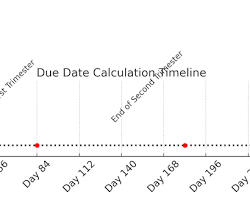
The Standardized Roadmap: Why doctors use your period as a 'fixed point' to create your 280-day delivery schedule.
By starting the clock on Day 1 of your period, doctors create a standardized 280-day roadmap. This ensures that throughout your journey, your progress is measured against a universal baseline, allowing for accurate tracking of milestones like the first heartbeat or the anatomy scan.
Section 2: The Hormone Cascade — The FSH Surge
While competitors focus on the "period," the real magic is happening in your brain. As your estrogen and progesterone levels drop, your pituitary gland begins pumping out Follicle-Stimulating Hormone (FSH).
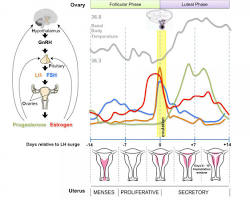
Biological Race: FSH signals your ovaries to mature a 'cohort' of follicles, from which a single dominant egg will be chosen.
This hormone is the "project manager" of your cycle. It travels to your ovaries and signals 5 to 20 small sacs, called follicles, to begin maturing. Each follicle contains an immature egg. Over the next several days, your body will select one "dominant" follicle that will eventually release the egg for conception in Week 2. You are currently in the process of Oogenesis—the creation of the very cell that will become your baby.
Section 3: Filling the Gap — Priming Your Body's DNA
Another major "Gap" is the nutritional science of Week 1. Most people know about Folic Acid, but few understand *why* it matters this early. Folic acid is a co-enzyme required for DNA synthesis.
During the rapid cell division that follows conception, any deficiency in folate can lead to "errors" in DNA replication. By saturating your tissues with folate in Week 1, you ensure that from the very first second of fertilization, your baby has the "blueprint materials" needed to build a healthy brain and spinal cord.
Section 4: Symptoms — The "Reset" Sensations
Symptoms in Week 1 are menstrual, but they are an indicator of how well your body is resetting for the journey ahead.
| Symptom | The Biological Reason | Management Tip |
|---|---|---|
| Abdominal Cramping | Prostaglandins causing the uterine muscles to contract to expel the lining. | Use a warm compress to improve blood flow to the pelvic region. |
| Period Fatigue | Low levels of all major sex hormones as the cycle resets. | Prioritize iron-rich foods like lentils or spinach to support healthy energy. |
| Bloating | Fluid shifts caused by the drop in progesterone. | Reduce salt intake and increase water to flush out excess fluids. |
Section 5: Action Plan — The Pre-Conception Foundation
If you are planning a pregnancy, Week 1 is the most critical time for habit formation. Here is your Gap-Filling strategy for Week 1:
Preconception Care: Your health this week establishes the foundation for your child's entire life.
Section 6: FAQ — Deep-Dive Expert Answers
Am I pregnant during Week 1? Explain the math.
Clinically, yes; biologically, no. Because the exact hour of conception is rarely known, the medical world uses your last period as a reliable "Day 1." This adds about 14 days of "bonus" time to your pregnancy before the baby is actually conceived, allowing for a standardized 40-week roadmap.
Can I take my regular medications during Week 1?
This is the perfect week for a "Pre-Conception Checkup." While there is no shared blood supply yet, some medications can stay in your system for weeks. Review all prescriptions, OTC meds, and supplements with your doctor now to ensure they are safe for a developing fetus.
Essential Tools for Week 1
👉 Calculate your pregnancy due date
👉 View the complete 40-week guide
Medical Disclaimer: This content is for informational purposes only. It is not intended to provide medical advice or to take the place of treatment from a physician.